How Megalac Supported Stronger Lamb Growth on a Hampshire Down Flock
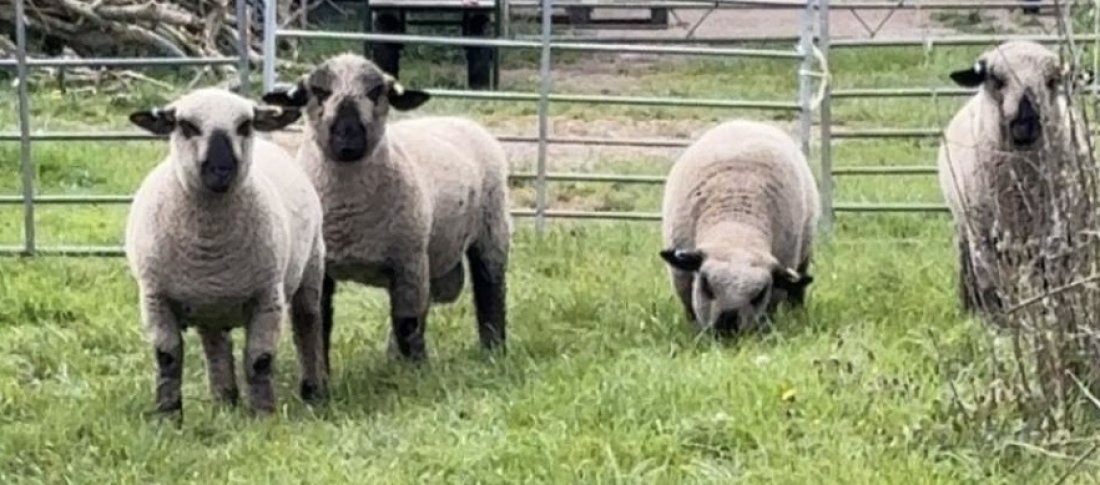
When Amanda Clements, one of our account managers, fed Megalac to her own pedigree Hampshire Down flock, it created an opportunity to see how the product performs in a different on-farm setting.
For six weeks leading up to lambing, ewes were fed 50g of Megalac per head per day, alongside their usual pre-lambing ration. Crucially, no other changes were made. Feed, forage and management remained the same as the previous year.
Colostrum quality: a strong start
One of the first things looked at was colostrum quality, measured using a Brix refractometer.
The change from the previous year was clear. Readings moved from around 24 mg/ml up to 27 mg/ml, putting them well above what’s generally considered a good level for lamb health and immunity.
In practical terms, that points to lambs getting a better start, with stronger passive transfer early on.
From a nutrition point of view, it’s not unexpected. Feeding rumen-protected fat in late pregnancy increases the energy density of the ration without affecting rumen function. That extra available energy can support both colostrum production and quality at a point where demand is high.
 Lamb performance: same system, different outcome
The more telling part came in the weeks after lambing.
Birth weights stayed the same, but growth rates shifted:
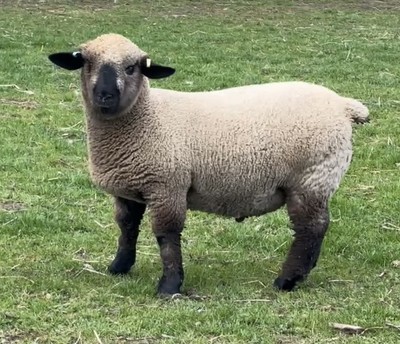
- Ram lambs, from the same sire as the previous year, were around 5kg heavier at 100 days
- Daily liveweight gain increased from 450g/day to 500g/day
With everything else held steady, the lambs simply grew faster.
It’s a reminder of how much early nutrition can influence performance further down the line. Small changes at the ewe stage tend to show up later in the lambs.
Why it’s interesting
While Megalac is more commonly associated with dairy systems, the principle is the same across ruminants. Supporting energy intake at key points, particularly late pregnancy and early lactation, can have a direct impact on both output and efficiency.
 A practical takeaway
As Amanda put it: “The colostrum results were encouraging, but seeing the lambs grow faster, with everything else the same, really shows the value of Megalac in the system.”
It’s a simple example, but a useful one. When nothing else changes, and performance still improves, it gives you something worth paying attention to.
If you’re thinking about how to get more from your ewes in the run-up to lambing, it may be worth looking at how energy is supplied in the diet…and whether protected fats like Megalac have a role to play.