Palm oil prices continue to reflect volatility in the global oil market
1 RM (Malaysian Ringgit) = 0.25 USD
1 USD = 0.76 GBP
*Exchange rates calculated and market prices reported on April 7, 2026 and reported in USD
Crude Palm Oil
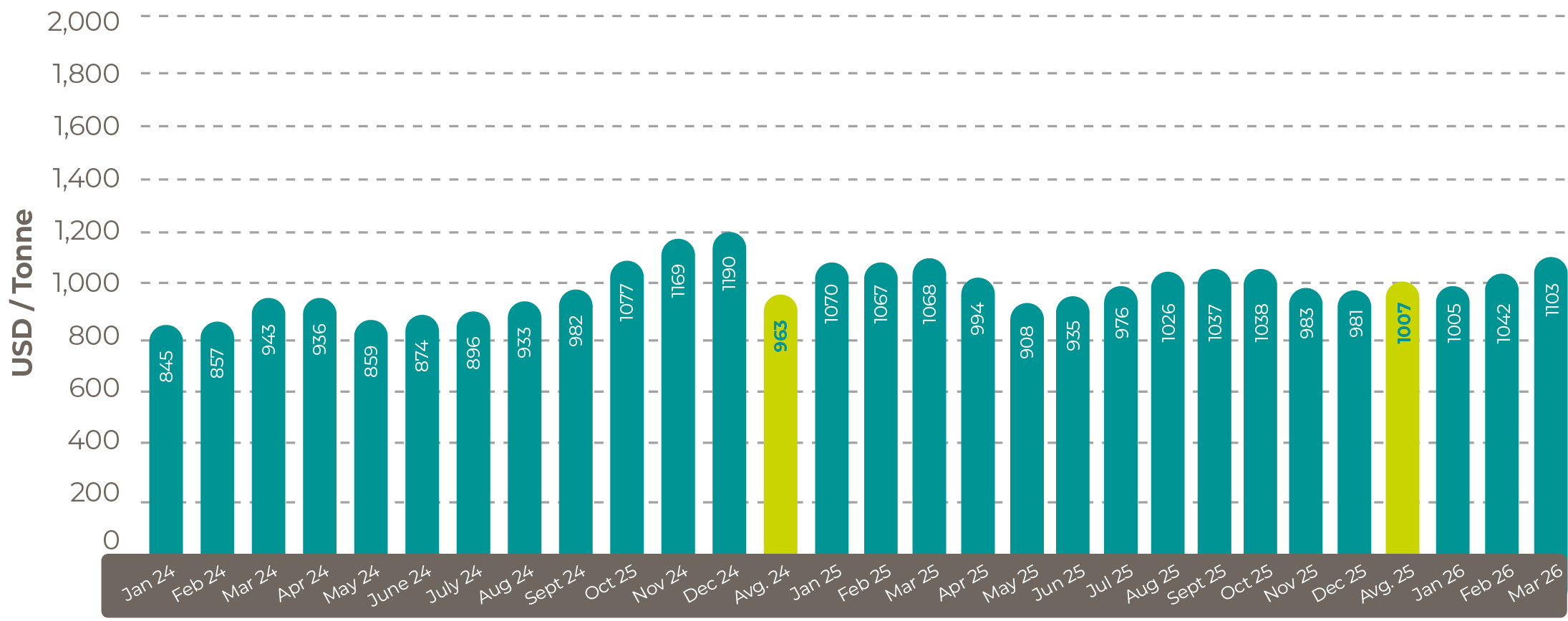
Average World Bank March 2026 palm oil price
US$1103/tonne (+US$61 in the month, an increase of 6.1%)
 Malaysia palm market
Plam oil prices reach their highest since late 2024
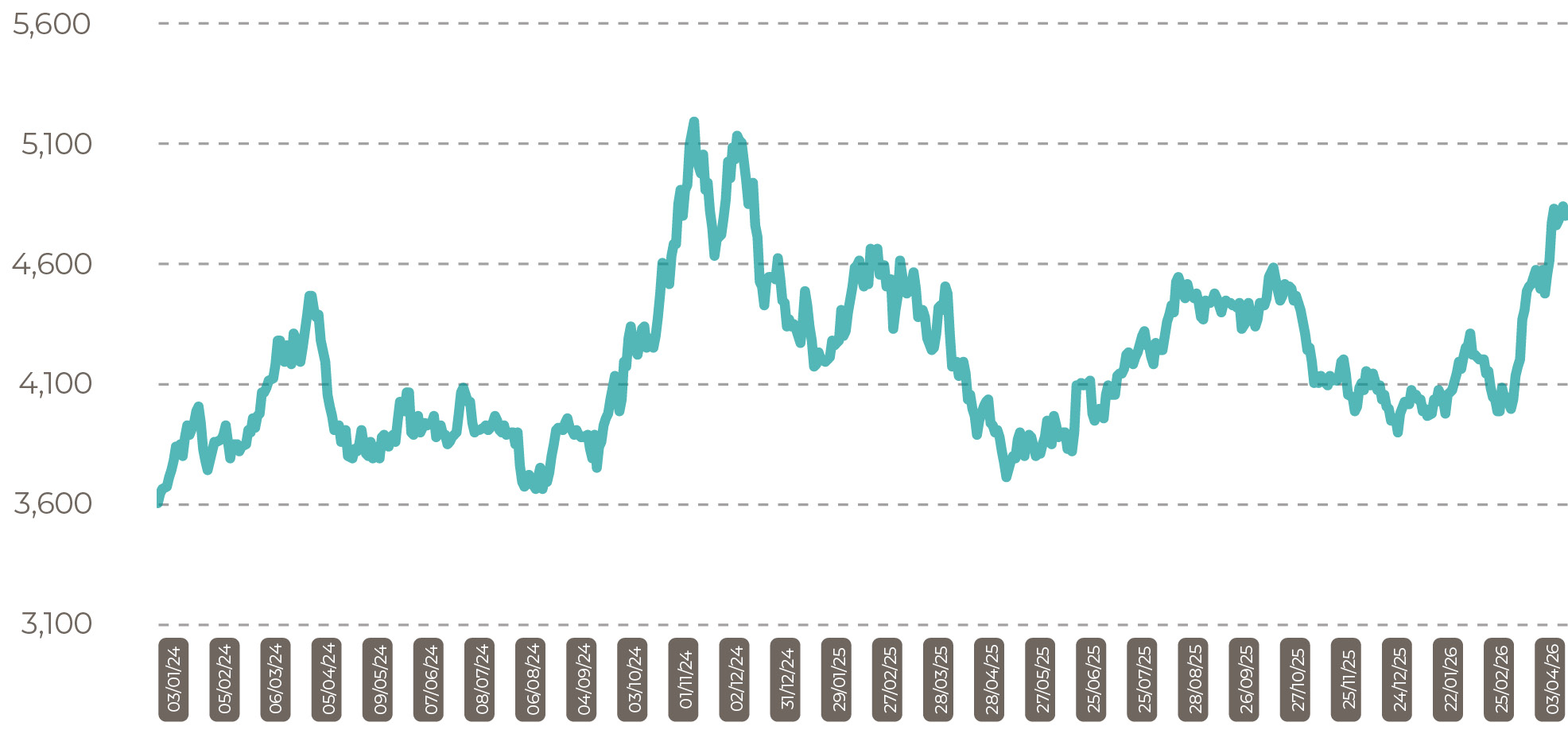
Malaysian palm oil prices were impacted by the ongoing conflict in the Middle East in the second half of March and into April. Crude oil held onto its gains seen in late February and rose and fell in line with the news from the region, with palm oil and other vegetable oils following suit. By the 7th April, the Malaysian palm oil settlement price was at RM4,811/tonne ($1,203), the highest it had been since the end of 2024.
That price was up 9.9% on the month before and 15% higher than the year before. However, it was still 32.3% less than the all-time peak price seen in April 2022, which followed Russia’s invasion of Ukraine.
Malaysia CPO Settlement Price RM
Vegetable oil
All vegetable oil prices rose in March
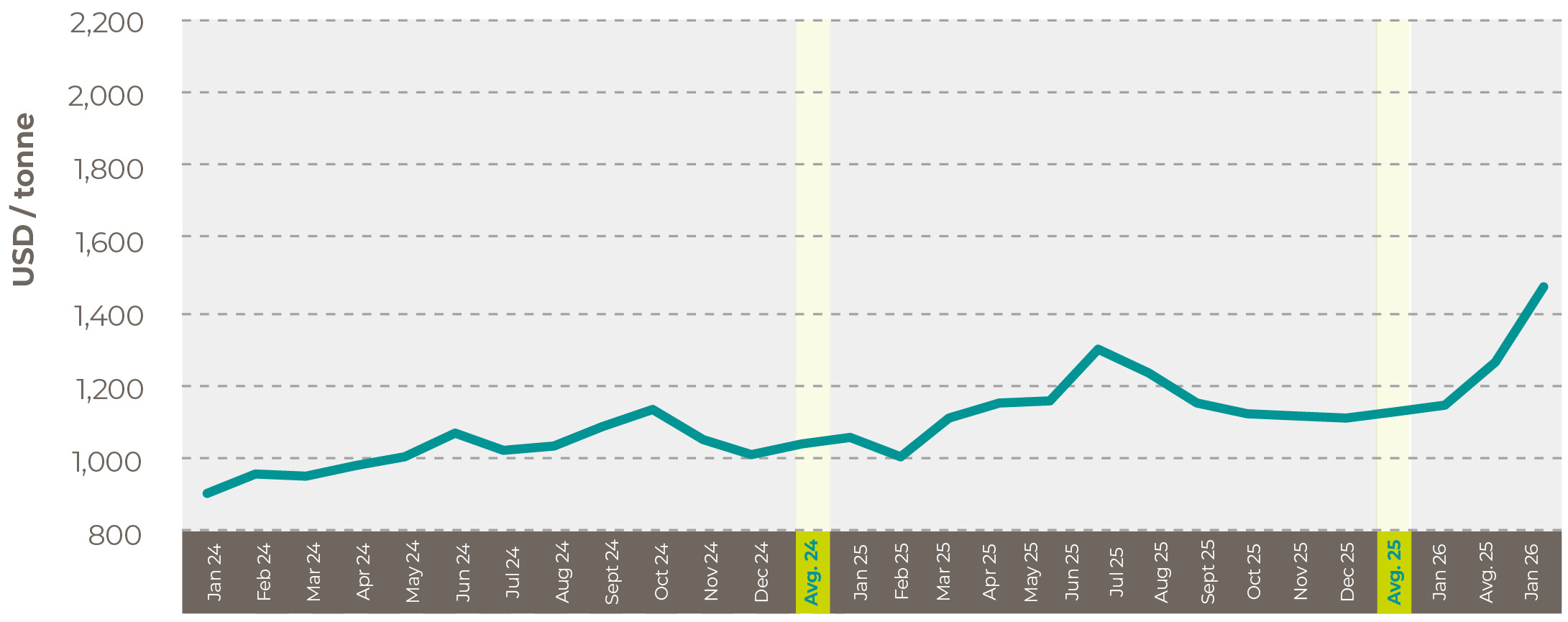
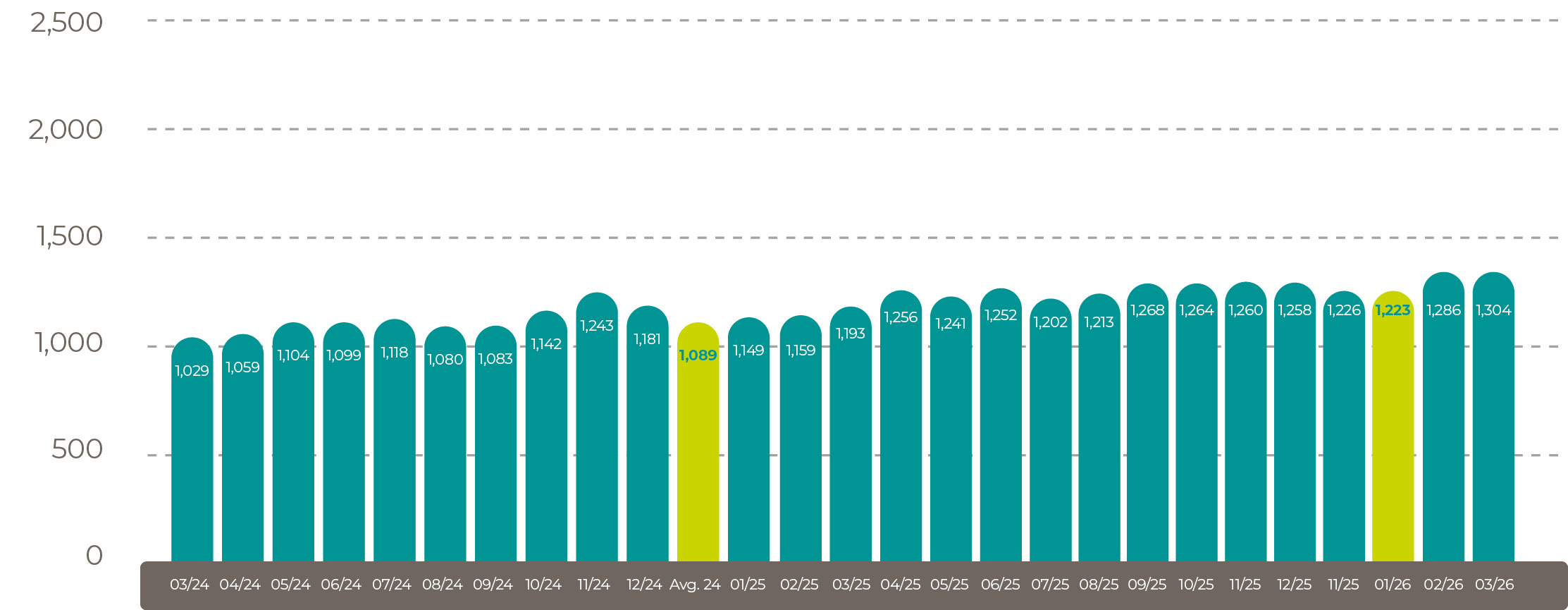
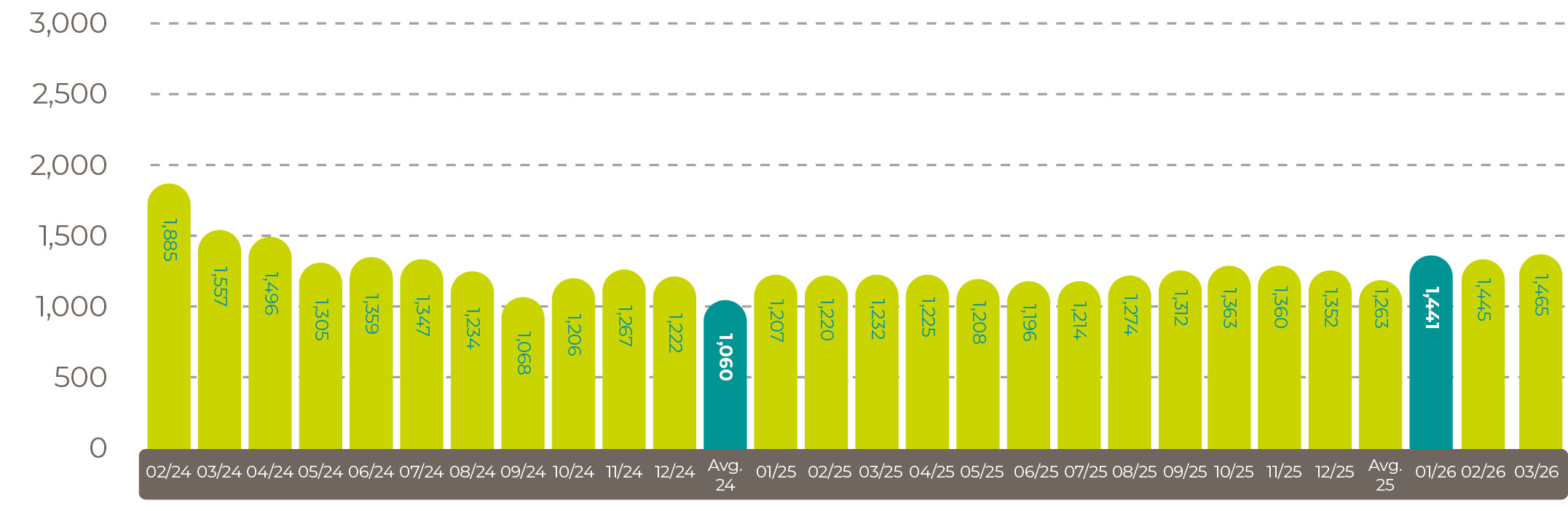
The average global palm oil price rose 6.1% in March to $1,103/tonne. That was the highest price it had been since December 2024, but 37.9% less than the all-time high in March 2022. Soybean oil prices rose 15.6% in the month to $1,482/tonne, with rapeseed oil prices up 2.2% to $1,304/tonne and sunflower oil 1.4% higher at $1,465/tonne. Brent crude oil prices rose by 45.8% in March to an average of $104 a barrel.
Increased Argentine and Ukrainian sunflowerseed production is expected to lead to increased total output of oilseeds globally, outweighing a drop in soybean production in the two countries, according to the USDA. The global crush of oilseeds is expected to be higher this season than last, with an increase in stocks.
The USDA’s March estimate for global oilseed production was at 571.3 million tonnes, an increase of 1.8 million tonnes on the February figure and 2.7% higher than the year before. Total oilseed use is expected to be 2.2% higher at 508.4 million tonnes, with trade up 5.9% to 171 million tonnes. That would leave stocks at 135.2 million tonnes, 2.4% more than the year before. Vegetable oil production is expected to be 2.5% higher at 221 million tonnes, with use up 2.4% to 208.6 million tonnes, trade down 0.1% to 87.1 million tonnes and stocks up 2.4% to 29.5 million tonnes.
See more here
Average world soybean oil prices in US$/tonne
Rapeseed oil
Average world rapeseed oil price in US$/tonne
Sunflower oil
Average world sunflower oil prices in US$/tonne
Shipping update
Shipping costs drop a fifth during January
Shipping costs have edged up since the start of the conflict in the Middle East, but remain lower than they were in June last year. The conflict has severely disrupted shipping in the Strait of Hormuz in the Gulf region, but the latest Drewry World Container Index is at $2,287 per 40-foot container. That compares to $3,543 in June 2025. The latest figure was only $8 more than the previous week, but it is 20.4% more than the cost in late February before the conflict began.
From the 2nd April 2026 Drewry World Container Index report:
The Drewry World Container Index (WCI) remained stable at $2,287 per 40-foot container, with rates holding steady on the Asia to Europe and Transpacific trade routes.
- Rates on Asia to Europe trades have remained relatively stable despite ongoing tensions in the Middle East. Spot rates on Shanghai to Genoa inched up 2% to $3,529 per 40-foot container, while Shanghai to Rotterdam stayed unchanged at $2,543 per 40-foot container. According to Drewry’s Container Capacity Insight, only four blank sailings have been announced for next week on the Asia to Europe trade, suggesting stable capacity. Meanwhile, Drewry expects spot rates to increase in the coming weeks as higher bunker fuel costs prompt carriers to implement emergency bunker fuel surcharges.
- On the Transpacific route, spot rates from Shanghai to New York increased 1% to $3,434 per 40-foot container, while those to Los Angeles decreased 1% to $2,663. Maersk is seeking US regulatory approval to waive the 30-day notice period and introduce an emergency bunker surcharge, citing elevated and volatile fuel costs amid Middle East tensions. The proposed surcharge is $200 per twenty-foot equivalent unit (TEU) for head-haul and $100 per TEU for backhaul dry shipments. With carriers continuing to push for rate increases, Drewry expects spot rates to increase further in the coming weeks.
- Ongoing disruptions in the Strait of Hormuz, a key route for nearly 20% of global oil, have tightened bunker fuel availability and pushed prices higher. In Asia, fuel supplies in key hubs like Singapore and China are starting to tighten, prompting carriers to adopt operational measures such as slow steaming, alternative refuelling strategies and emergency fuel surcharges to manage costs. These measures are expected to keep freight rates elevated in the short term.
Source: Drewry Supply Chain Advisors
Disclaimer: The information in this document has been obtained from or based upon sources believed to be reliable and accurate at the time of writing. The document should be for information purposes only and is not guaranteed to be accurate or complete.