Political uncertainty pushes up all oil prices
1 RM (Malaysian Ringgit) = 0.25 USD
1 USD = 0.73 GBP
*Exchange rates calculated and market prices reported on 4th February, 2026
Crude Palm Oil
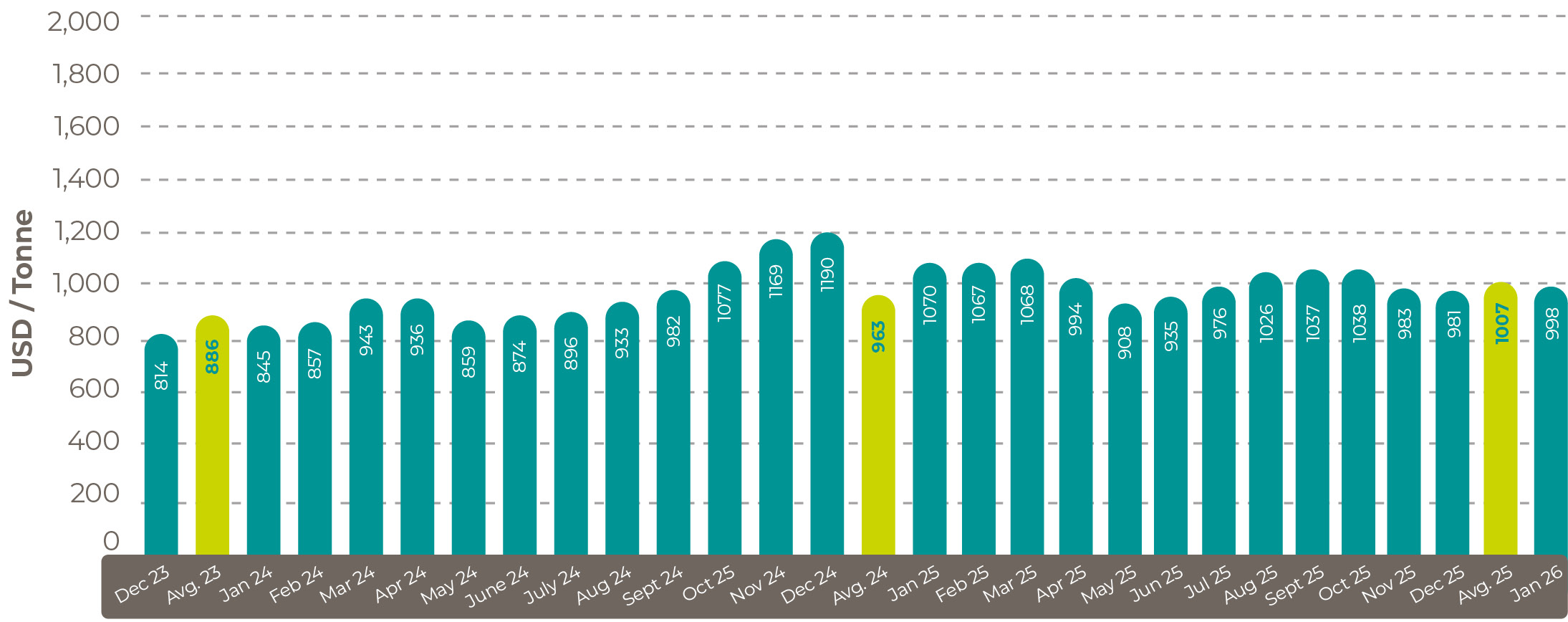
Average World Bank January 2026 palm oil price
US$998/tonne (+US$17 in month)
 Malaysia palm market
Price rally in the second half of January peters out in early February
Malaysian palm oil prices rose in the second half of January, but were starting to ease by the beginning of February.
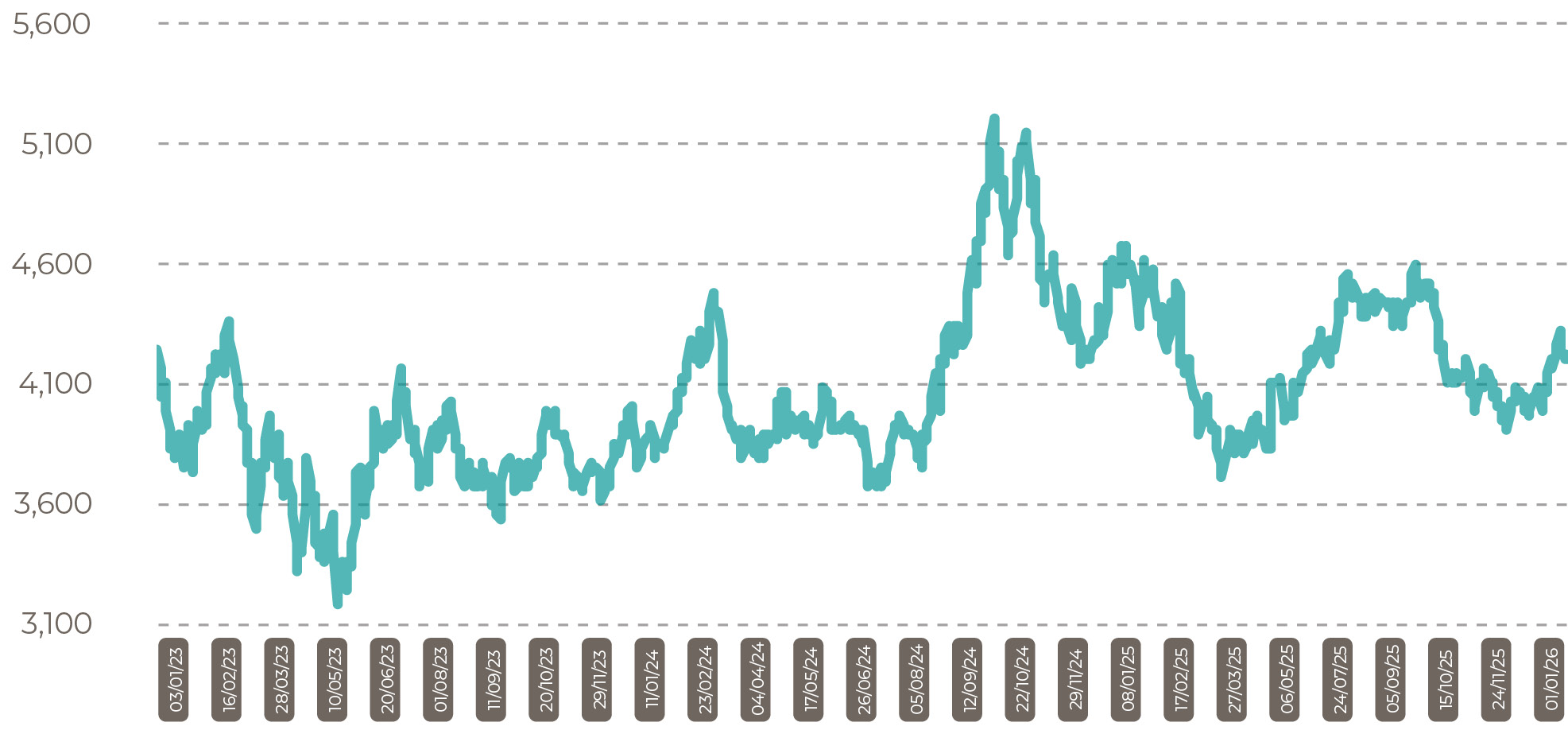
The Malaysia CPO settlement prices reached their highest point for three months at RM4,319/tonne (US$1,080) on the 29th January, which was an 8.2% increase on the lowest price of the month on the 15th of January.
The end-of-the-month price was RM4,231/tonne (US$1,058), 5.9% more than the month before and 1.0% below the price the year before and 40.5% lower than the all-time high price in April 2022. Values continued to slip in early February, with the 4th February price at RM4,215/tonne.
Palm oil prices rose in January on the back of higher vegetable oil and crude oil prices across the world due to political uncertainty.
Malaysia CPO Settlement Price RM
Vegetable oil
Prices rise across the board in January
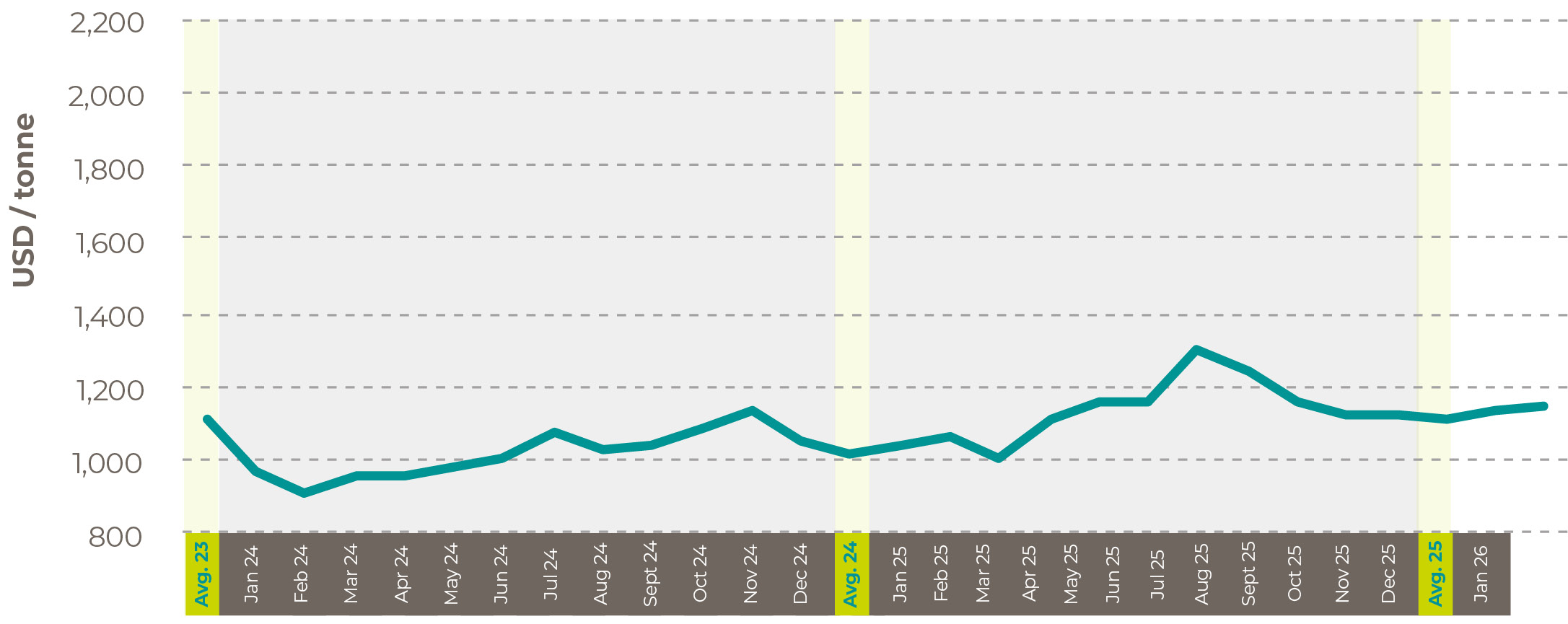
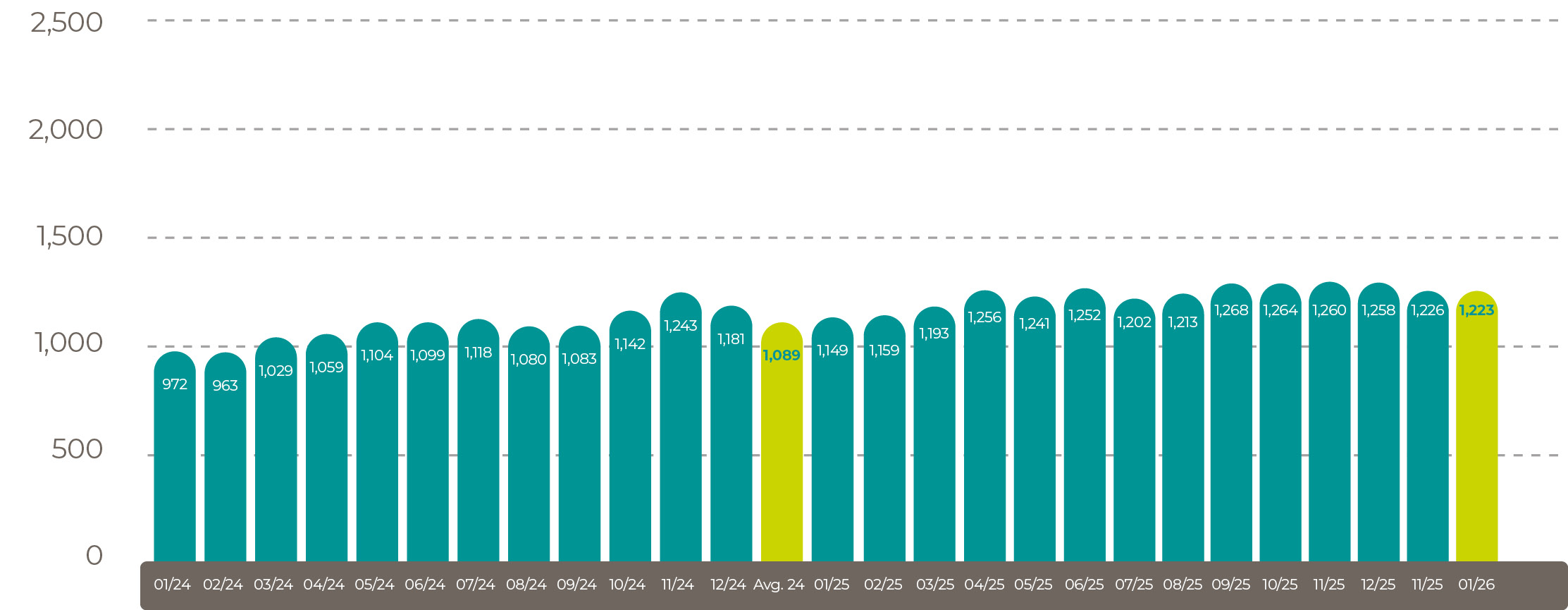
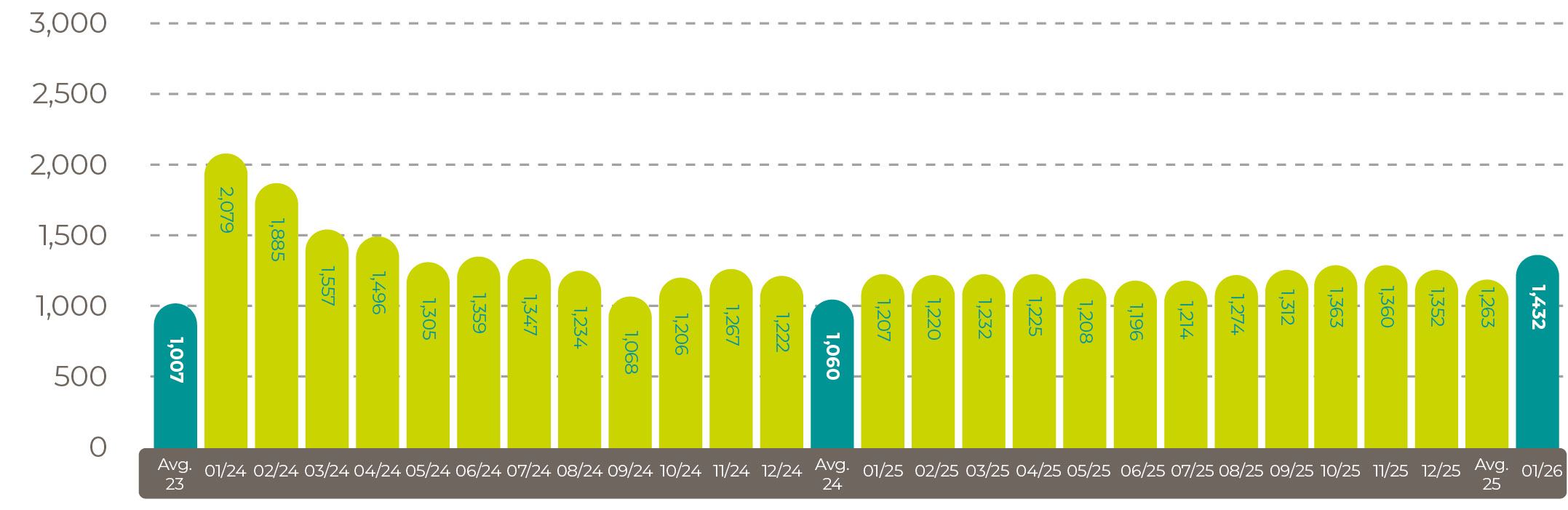
The global average palm oil price rose 1.8% in January, according to the World Bank, to US$998/tonne. That was a 6.8% drop on the year, while palm kernel oil rose 8.4% over the year. The average soybean oil price was up 3.2% in the month and 9.9% over the year to US$1152/tonne. Rapeseed oil fell 2.8% in the month and rose 6.5% over the year to US$1223/tonne, while sunflower oil prices averaged US$1432/tonne in January, 18.7% more than the year before and 6.0% higher than in December 2025.
The USDA's latest outlook for the 2025/26 season raises US oilseed production by 500,000 tonnes to 126.2 million tonnes, with larger soybean, rapeseed and sunflowerseed crops outweighing smaller cottonseed and peanut crops. However, this year’s crop is still expected to be 1.9% lower than last year's. Global oilseed production is now expected to be 2.9 million tonnes more than it was in December at 693.1 million tonnes. That is 1.3% more than last year.
Ending stocks of vegetable oil are expected to be similar to last season at 29.9 million tonnes, with usage up 2.5% to 228.3 million tonnes and trade down 1.2%.
Average world soybean oil prices in US$/tonne
Rapeseed oil
Average world rapeseed oil price in US$/tonne
Sunflower oil
Average world sunflower oil prices in US$/tonne
Shipping update
Shipping costs drop a fifth during January
Despite rising international tension, shipping costs fell throughout January, with the cost on the 29th of January at US$2,107 for a 40-foot container, according to the Drewry World Container Index (WCI). That was down 21.3% in the month. The latest cost is 38.8% lower than a year ago but 27.6% higher than the cost in October 2025.
From the 29th January 2026 Drewry World Container Index report:
- The Drewry World Container Index (WCI) decreased 5% to $2,107 per 40-foot container for the third consecutive week, primarily due to a drop in rates on the Transpacific and Asia–Europe trade routes.
- Spot rates on Shanghai to New York decreased 7% to $2,969 per 40-foot container, and those on Shanghai to Los Angeles fell 4% to $2,442 per 40-foot container. According to Container Capacity Insight, carriers have announced 63 blank sailings in February, up from 27 in January, as demand remains weak ahead of the Chinese New Year factory closure. Drewry expects spot rates to continue to decrease further in the coming weeks.
- Spot rates on Asia–Europe trade routes continued to decrease for the third consecutive week, with rates on Shanghai–Rotterdam dropping 5% to $2,379 per 40-foot container and those on Shanghai–Genoa falling 6% to $3,293. Amid declining rates, carriers are adopting divergent strategies for the Suez Canal: CMA CGM is withdrawing its Asia–Europe services from the region, while Maersk plans to resume its scheduled service from India to the US East Coast via the canal.
- These conflicting operational decisions suggest that effective shipping capacity will be reintroduced to the market gradually rather than all at once. This ‘drip-feed’ approach allows carriers to carefully assess risk and adjust their future networks, preventing a catastrophic collapse in spot rates.
Source: Drewry Supply Chain Advisors
Disclaimer: The information in this document has been obtained from or based upon sources believed to be reliable and accurate at the time of writing. The document should be for information purposes only and is not guaranteed to be accurate or complete.