Malaysian palm oil price slips for most of May
1 RM (Malaysian Ringgit) = 0.25 USD*
1 USD = 0.75 GBP
*Note, exchange rates are for May 15, 2026
The Malaysian palm oil settlement price trended down in the first half of May, although it remains strongly influenced by global events and the crude oil price.
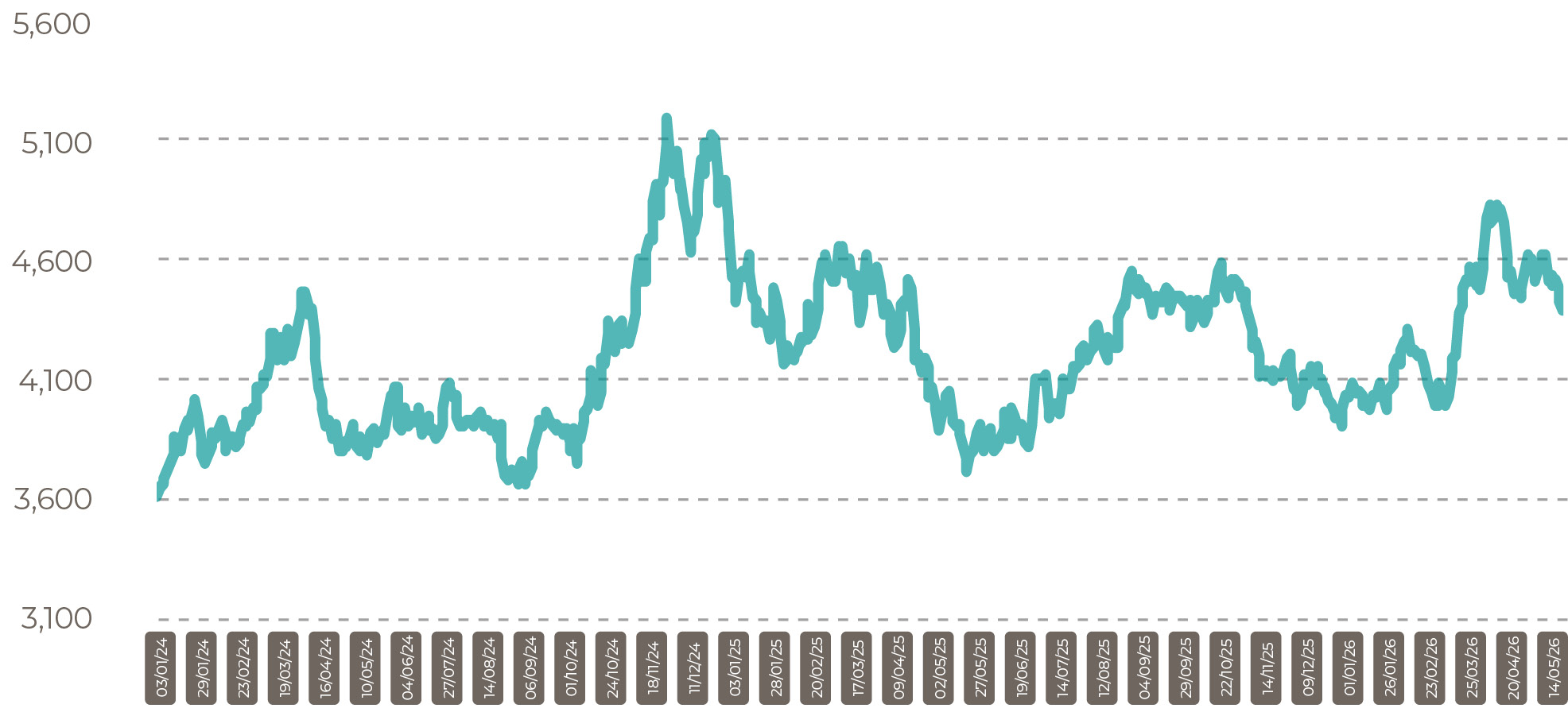
By 14th April, it was at RM4,393/tonne (US$1,098), 9.2% less than the peak it achieved in early April. It regained a little ground on the 15th, ending the day at RM4,419/tonne (US$1,105), which was 3.1% less than at the start of the month, 1.2% less than the month before and 14.4% more than the year. It also represents three week-on-week declines.
The latest price is 9.3% more than just before the start of the Middle East conflict at the end of February. In the comparable period following Russia’s invasion of Ukraine in February 2022, the price rose 1.9%. However, it was already much higher than it is today at RM5,966/tonne (US$1,491) and peaked at RM7,104/tonne (US$1,776) in April 2022, which is 37.8% more than the latest price.
Malaysia palm prices CPO Settlement Price RM
 Analysis: Value of Ringgit and other oils influences palm
The small increase in Malaysian palm oil prices in mid-May was driven by a slightly weaker Malaysian Ringgit and higher soyoil prices on the Chicago futures market. Bearish price factors include weaker Chinese vegetable oil prices and strong Malaysian production. The volatile crude oil price, which has been trading above US$100 a barrel recently, also has an influence.
Reuters technical analyst Wang Tao is quoted as saying that RM4,348/tonne (US$1,087) is a key ‘support level’ below which buyers step in and purchase.
A battle between the palm bulls and bears
There is evidence that Malaysian palm oil exports rebounded in May, with SunSirs Data Commodiy Group reporting an 8.5% increase in the volume of shipments in the first 10 days of the month. However, production and stocks remain relatively high.
SunSirs expects the tussle between bullish and bearish factors to continue, keeping prices relatively stable. Spot buying of palm oil remains sluggish, with buyers not wanting to build stocks and only buying what they need. India – the world’s largest importer of vegetable oil - is favouring soybean and sunflower oil over palm oil currently because of its relatively high cost.
Policy and weather may influence prices over the coming months. Indonesia is expected to implement its biodiesel B50 policy in July, which will require a diesel blend that includes 50% vegetable oil. That will increase domestic demand and reduce availability for export. Meanwhile, a very strong El Niño weather system is building, which could increase the risk of drought in Southeast Asia and have an impact on production.
Stronger Malaysian palm production and weaker exports in April
Malaysia’s palm oil production was much greater in April than in March, but exports were down.
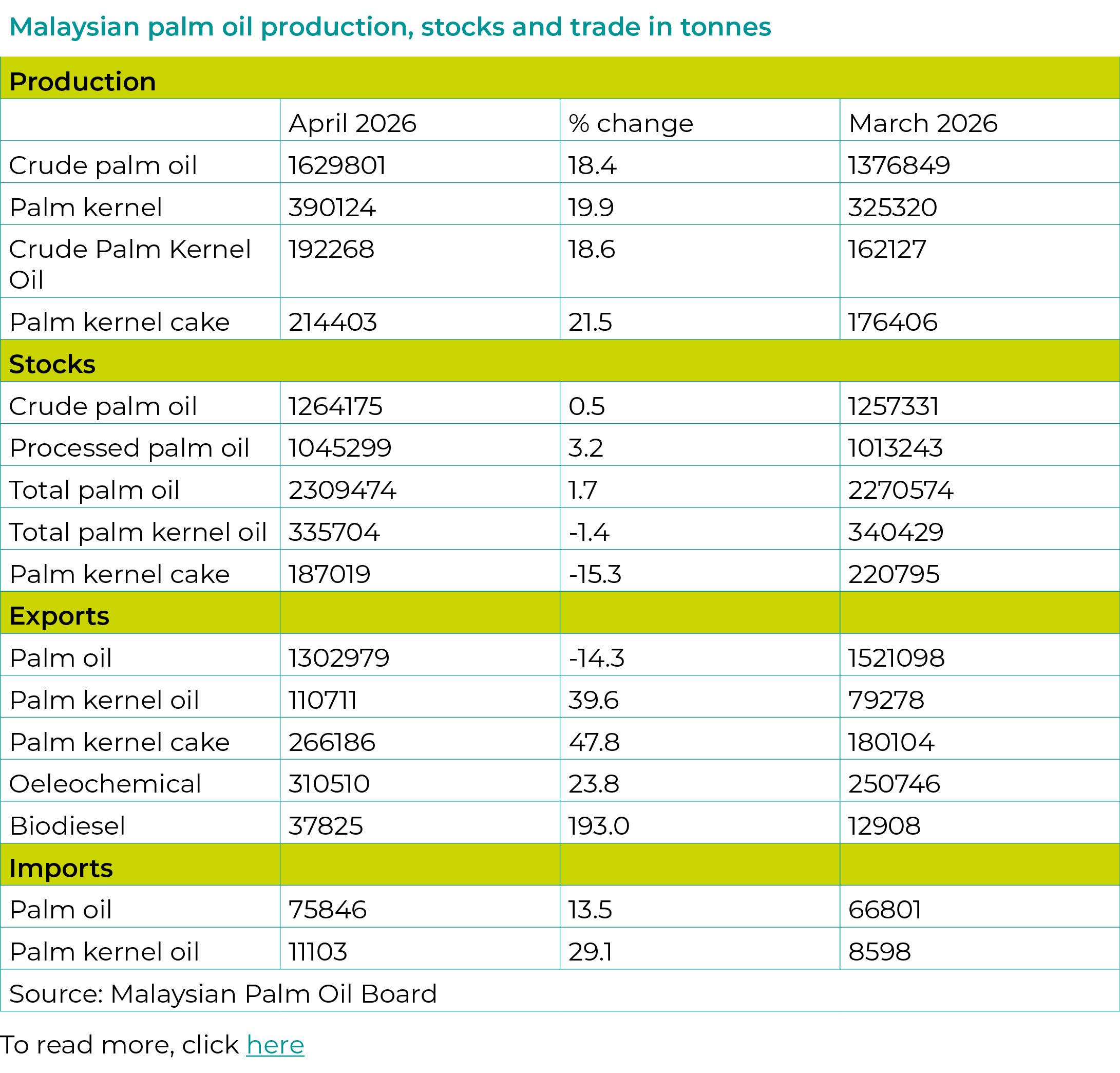
Output of crude palm oil was at 1.630 million tonnes in the month, according to the Malaysia Palm Oil Board, which was 18.4% up on the March figure. On a per-day basis, the increase was at 22.3%. Palm kernel, crude palm kernel oil and palm kernel cake production were also up by between 18.6% and 21.5%.
Stocks of crude palm oil were up 0.5% to 1.264 million tonnes, with a 3.2% increase in processed palm oil stocks to 1.045 million tonnes. Exports of palm oil were down 14.3% in the month to 1.321 million tonnes, but there was a significant increase in demand for palm kernel oil and cake, with shipments of biodiesel up by almost 200%.
Disclaimer: The information in this document has been obtained from or based upon sources believed to be reliable and accurate at the time of writing. The document should be for information purposes only and is not guaranteed to be accurate or complete.