Palm oil gains ground amid softer vegetable oil markets
Sept 3, 2026
1 RM (Malaysian Ringgit) = 0.21 USD
1 USD = 0.74 GBP
*Exchange rates calculated and market prices reported on September 3, 2026
Crude Palm Oil
Average World Bank August 2026 palm oil price
US$1117/tonne (+US$16 in the month, an increase of 1.5%)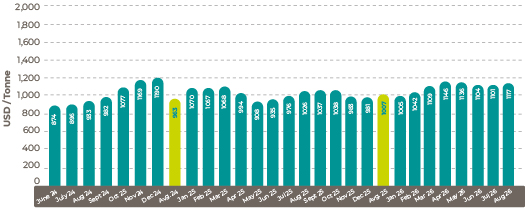
Source: World Bank
Malaysia palm market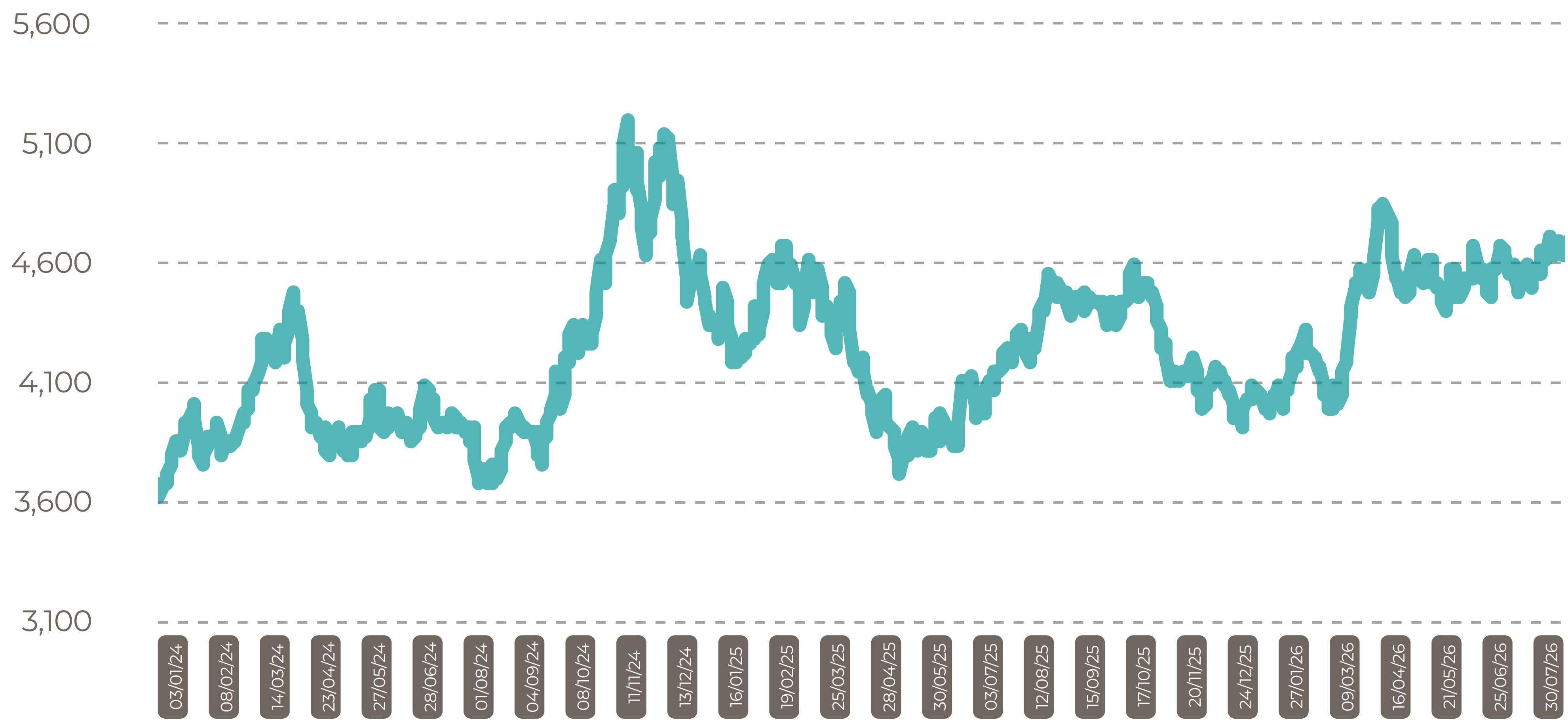
Malaysian palm oil prices hit RM5,000/tonne for the first time in more than four years
After a relatively quiet July on the palm oil market, August saw the greatest volatility since the start of the Middle East conflict in March, as concerns over vegetable oil production and fluctuating crude oil prices had an impact.
The Malaysian palm oil settlement price topped RM5,000/tonne (US$1,050) for the first time since June 2022 on Aug. 21, having risen 8.3% from the beginning of the month. There was then more volatility, with the price slipping 7.9% to RM4,617/tonne (US$969) by the end of the month.
The latest price on Sept. 2 was RM4,945/tonne (US$1,038), which was 6.8% higher than a month earlier and 4.2% higher than in September 2025. The price was still 30.4% below the all-time high in April 2022 following Russia’s full-scale invasion of Ukraine.
Vegetable oil
Small rise in global palm oil prices as other oils hold steady
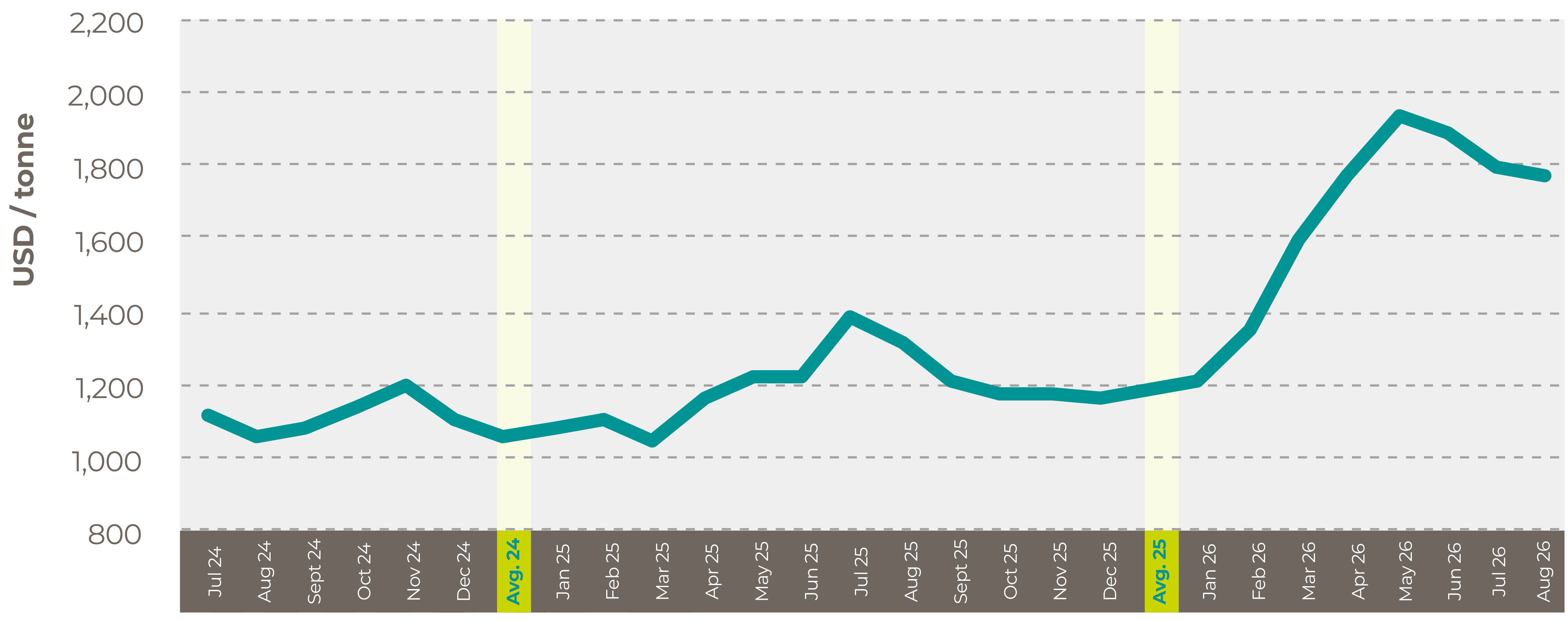
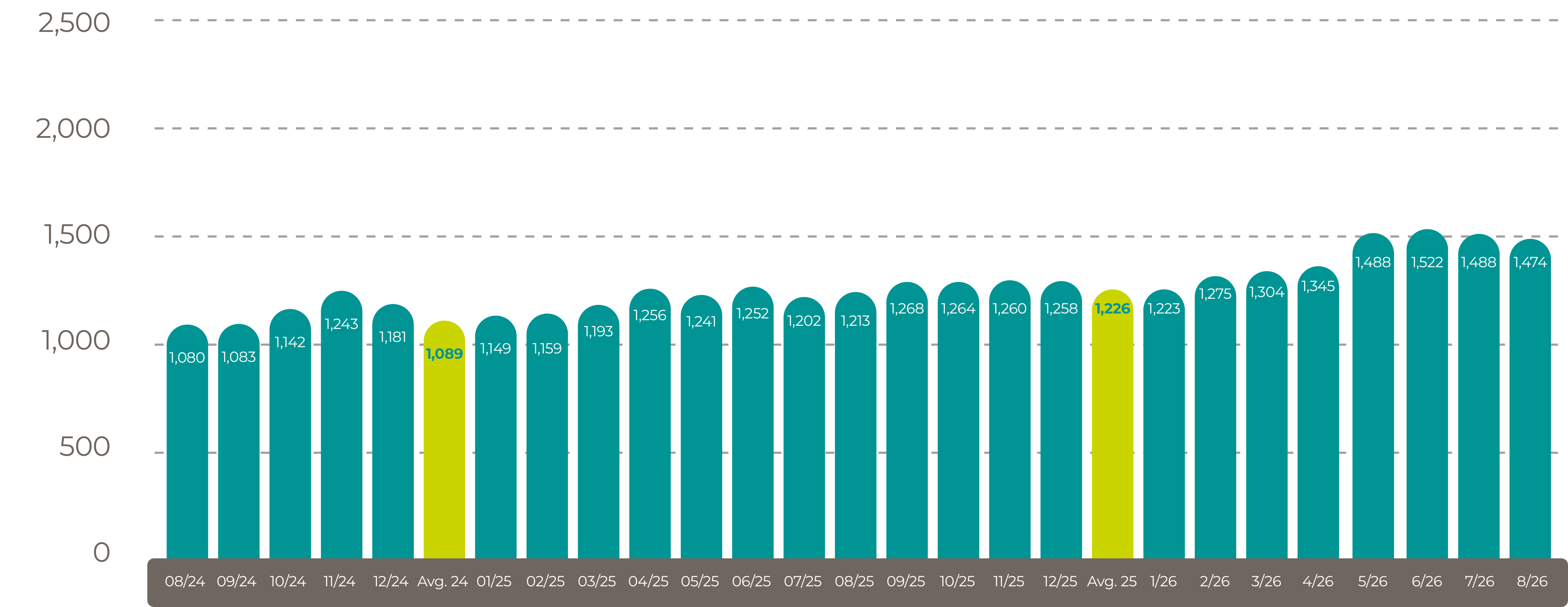
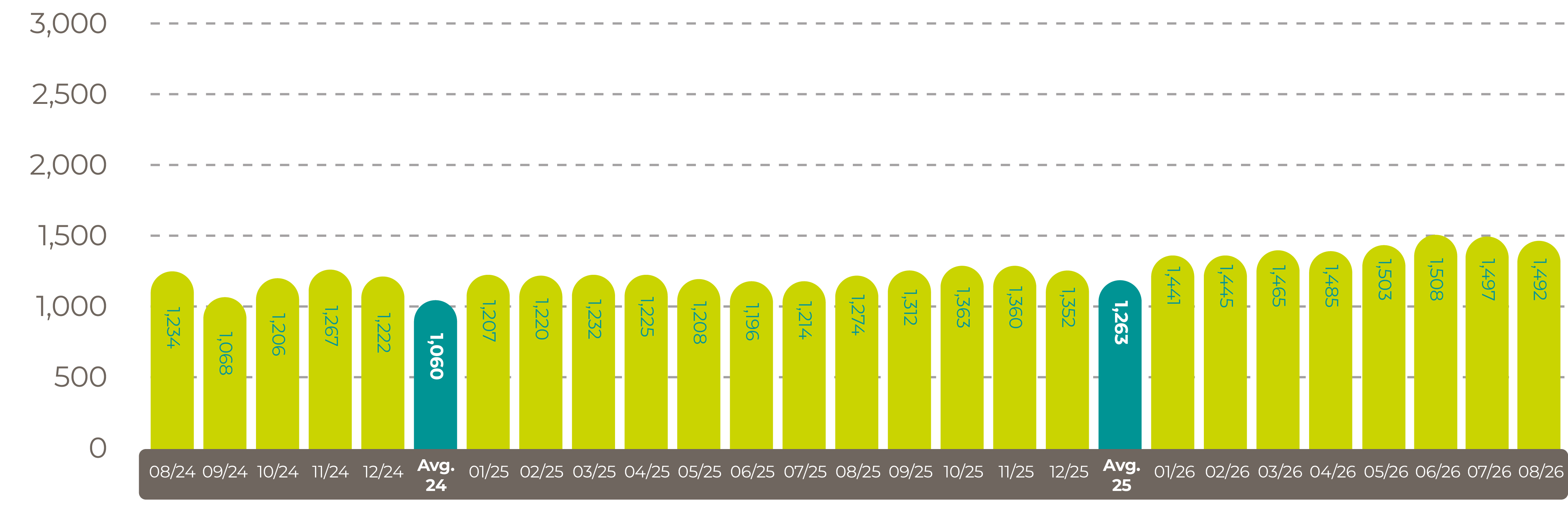
Global palm oil prices rose 1.5% in August to an average of US$1,117/tonne, according to the World Bank. That was 8.9% higher than the year before. However, palm kernel oil fell 6.2% to US$2,264/tonne. Other vegetable oil prices also fell during the month but remained higher year over year. The average soybean oil price was down 1.2% during the month to US$1,638/tonne but up 31.6% year over year. There was a 0.9% drop in average rapeseed oil prices to US$1,474/tonne during the month, but values were up 21.5% over the year. The sunflower oil price made an annual gain of 17.1% but was down 0.3% during the month to US$1,492/tonne. Crude oil prices rose 5.8% during the month to US$84.40 a barrel, which was 26.5% higher than the year before.
There was a small increase in global oilseed production expectations in August, according to the U.S. Department of Agriculture, from 719.97 million tonnes to 721.02 million tonnes. That would be 2.9% more than in the 2025/26 season and 4.9% more than in 2024/25. Trade is expected to increase 0.9% from last season, with usage up 3.2% to 609.54 million tonnes. That would leave stocks of 146.29 million tonnes, 0.4% higher than last year.
Vegetable oil production is forecast to be 2.6% greater this season than last at 244.95 million tonnes. The USDA forecasts total usage to be 3.2% greater at 238.61 million tonnes, while stocks are estimated to be little changed from last year at 30.76 million tonnes.
U.S. oilseed production is expected to be a little higher than forecast in July at 132.7 million tonnes, with a larger soybean crop outweighing reduced peanut and cottonseed production. U.S. soybean yields are lower than last year, but a larger area has made up that deficit. The U.S. season-average soybean farm price is forecast at $11.40 per bushel.
Elsewhere, hot weather in Europe has reduced sunflowerseed and rapeseed production, with a smaller soybean area in Ukraine also impacting. Canadian rapeseed production is higher, aided by favourable growing conditions. The USDA said:
“Global 2026/27 soybean supply and use forecasts include increased production, raised crush, and slightly higher ending stocks. Higher US production is partly offset by lower production for Ukraine. Global soybean exports are unchanged as lower exports for Ukraine are offset by higher exports for Argentina. Global crush is raised for the United States and Canada but lowered for Ukraine. Global soybean ending stocks are increased slightly to 124.2 million tonnes.”
Soybean oil
 Rapeseed oil
Sunflower oil
Shipping update
August shipping costs creep up again
After slipping in July, shipping costs increased overall during August. The Drewry World Container Index stood at US$4,255 per 40-foot container at the start of the month and reached US$4,473 by Aug. 27, a 5.1% increase. However, the index fell 1% in the final reported week of August. Costs were still below the early July peak of US$4,630 per container but more than double the September 2025 cost.
From Drewry’s Aug. 27, 2026, World Container Index report:
- Drewry World Container Index (WCI), the benchmark widely referenced by procurement teams, decreased 1% to $4,473 per 40-foot container, driven by lower rates on the Transpacific and Asia–Europe trade routes.
- Spot rates from Shanghai to New York decreased 2% to $9,333 per 40-foot container, while those from Shanghai to Los Angeles remained stable at $6,818 per 40-foot container. According to Drewry’s Container Capacity Insight, four blank sailings have been announced for next week, down from seven this week, indicating an increase in capacity. With demand remaining resilient and carriers continuing to manage capacity, Drewry expects freight rates to remain less volatile next week.
- On the Asia–Europe trade route, spot rates declined this week, with rates from Shanghai to Genoa falling 2% to $4,866 per 40-foot container and from Shanghai to Rotterdam decreasing 3% to $4,287 per 40-foot container. According to Drewry’s Container Capacity Insight, four blank sailings have been announced for next week, up from two this week, reflecting constrained capacity. Last week, congestion at Shanghai port increased to an average vessel waiting time of 96 hours from 35 hours the week before. Drewry expects freight rates to remain stable next week.
- The East–West container freight market remains uncertain as geopolitical and operational pressures continue to reshape shipping routes. Uncertainty around the Strait of Hormuz persists, while some carriers are cautiously resuming Suez Canal transits following improved security assessments. At the same time, congestion across Asian ports and low Rhine water levels are disrupting cargo flows, and the Panama Canal is set to reduce transit capacity from September amid water constraints. With carriers adjusting capacity through blank sailings, shippers should book early and allow additional lead time to minimise rollover and transit-delay risks.
Source: Drewry Supply Chain Advisors
Disclaimer: The information in this document has been obtained from or based upon sources believed to be reliable and accurate at the time of writing. The document should be for information purposes only and is not guaranteed to be accurate or complete.