Weaker palm oil prices despite volatile crude oil market
October 5, 2026
1 RM (Malaysian Ringgit) = 0.21 USD
1 USD = 0.74 GBP
*Exchange rates calculated and market prices reported on September 3, 2026
Weaker palm oil prices despite volatile crude oil market; China-US shipping costs remain high
Crude Palm Oil
Average World Bank September 2026 palm oil price
US$1180/tonne (+US$48 in the month, an increase of 4.2%)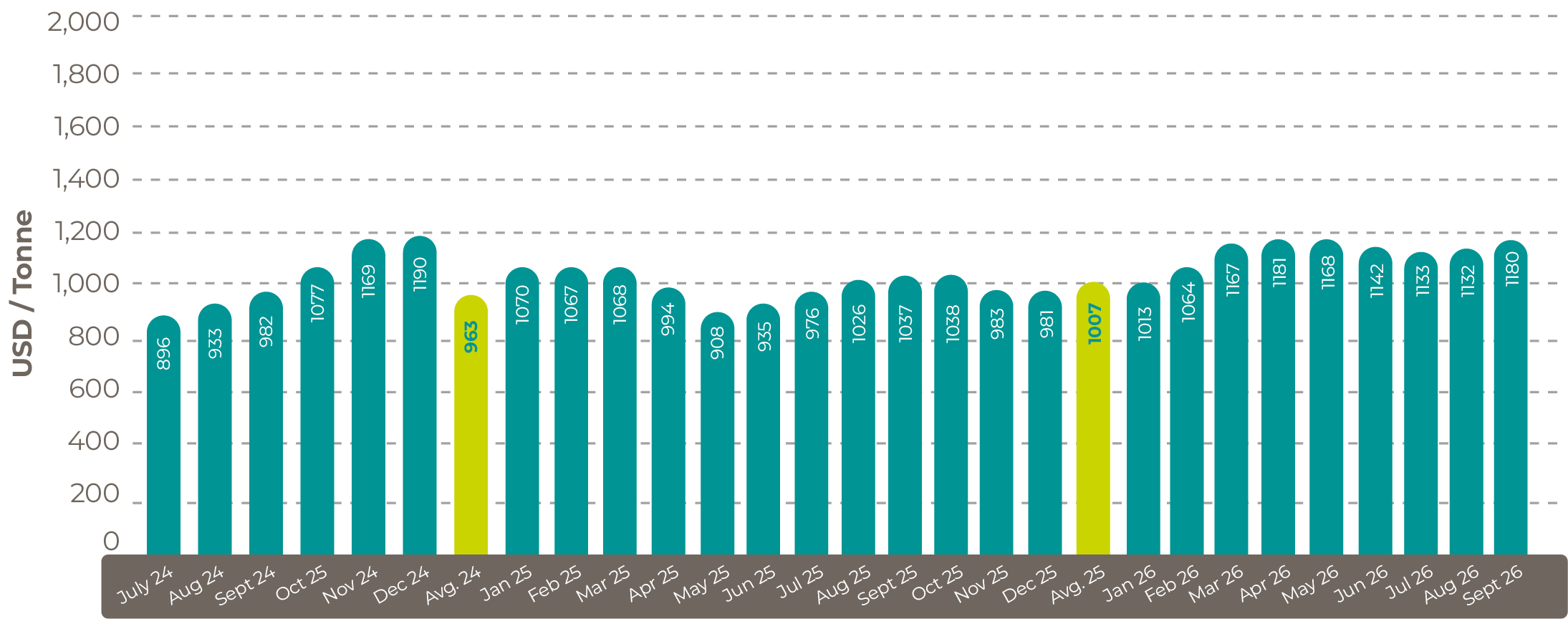
Malaysia palm market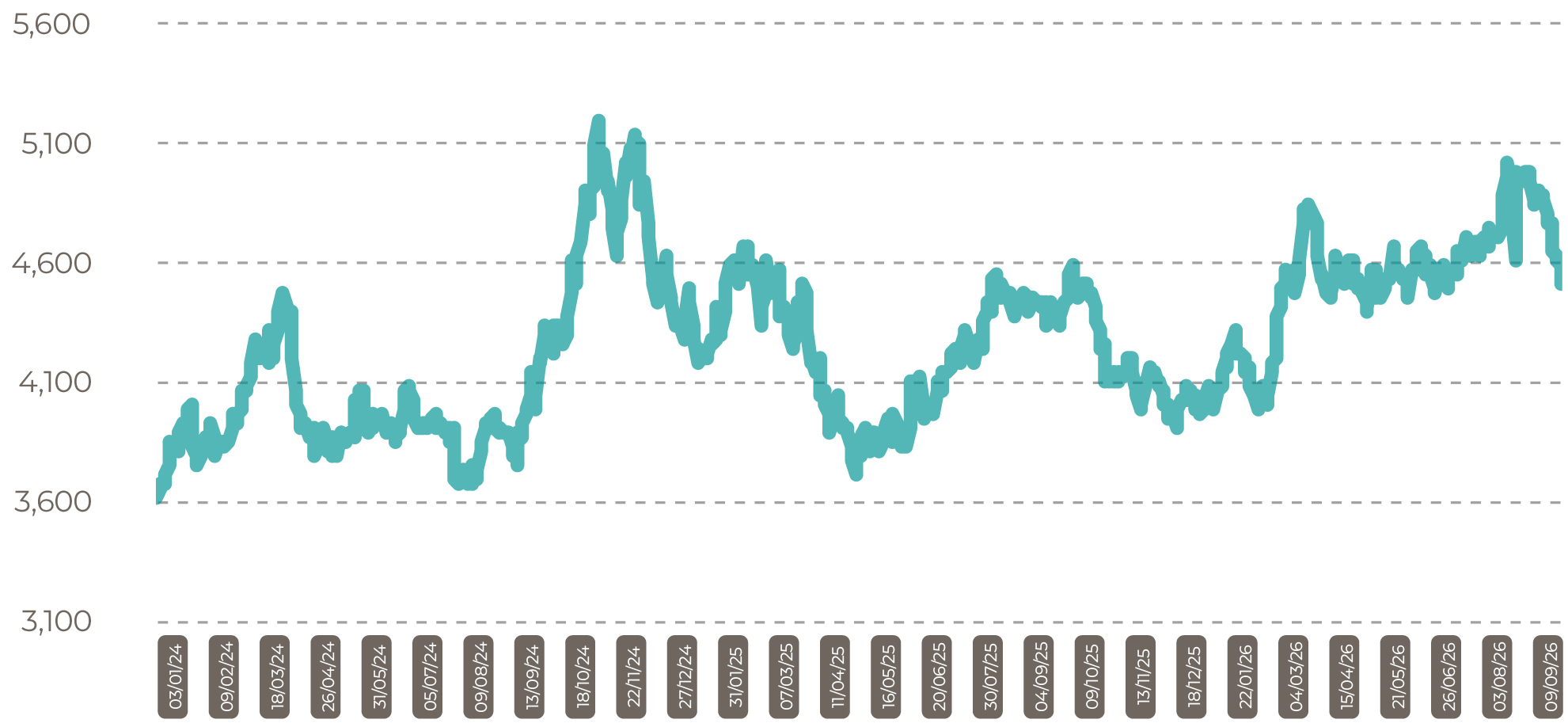
Malaysia palm oil price drops in late September
The Malaysian Palm Oil Settlement price tumbled in the second half of September, despite relatively strong crude oil prices.
By October 5, the price had dropped to RM4,535/tonne (US$1,088), down 8.2% from September and the lowest value since early July 2026. The plunge in values was rapid, as the average price was still above RM4,800/tonne (US$1,152) on September 22.
The latest price was 2.1% more than the year before, but 36.2% less than the all-time high in April 2022 following Russia’s invasion of Ukraine.
Reports of larger stocks of Malaysian palm oil pushed down prices, with volumes expected to be above three million tonnes in figures due out in the next few days. Meanwhile, cargo surveyors report a drop in September exports of up to 29%, adding to surpluses.
Vegetable oil
Global vegetable oil prices a mixed bag
The average global palm oil price rose 4.2% in September to US$1,180/tonne, which was 13.8% more than the year before, according to the World Bank. Palm kernel oil prices were up 4% in the month to US$2,355/tonne.
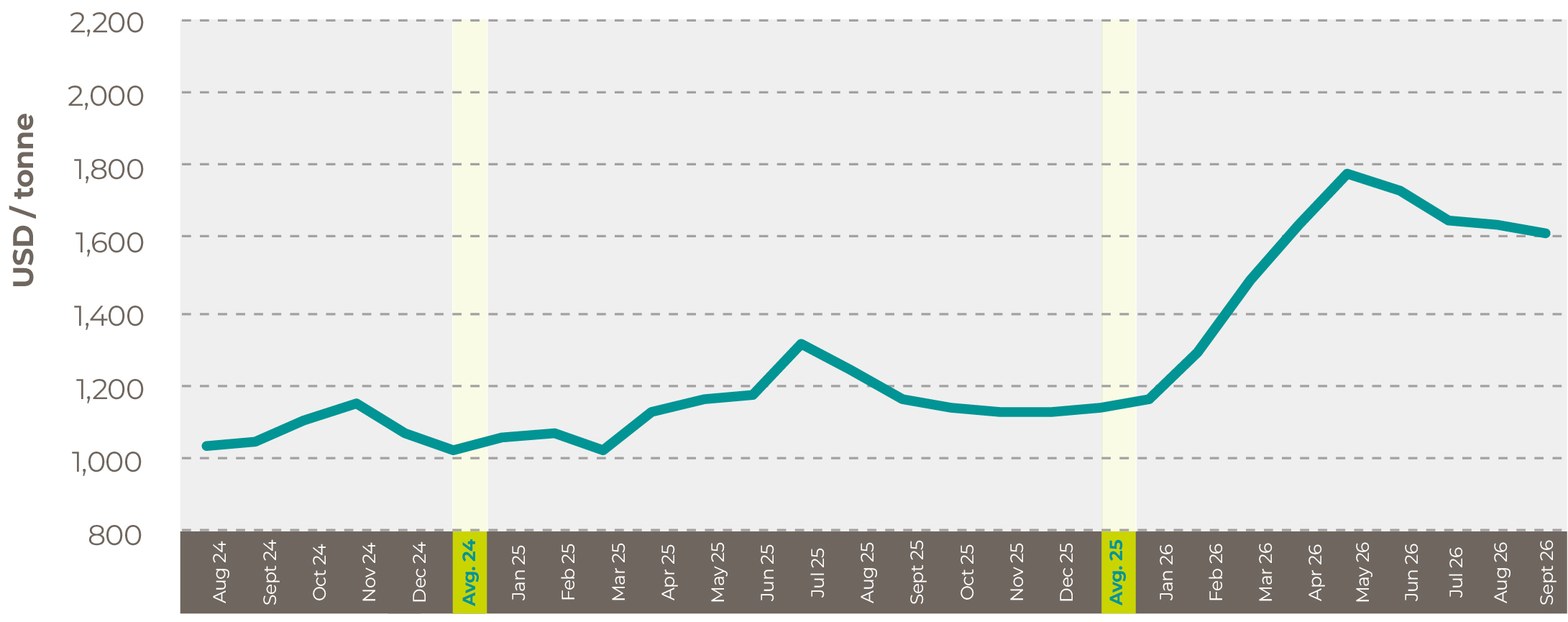
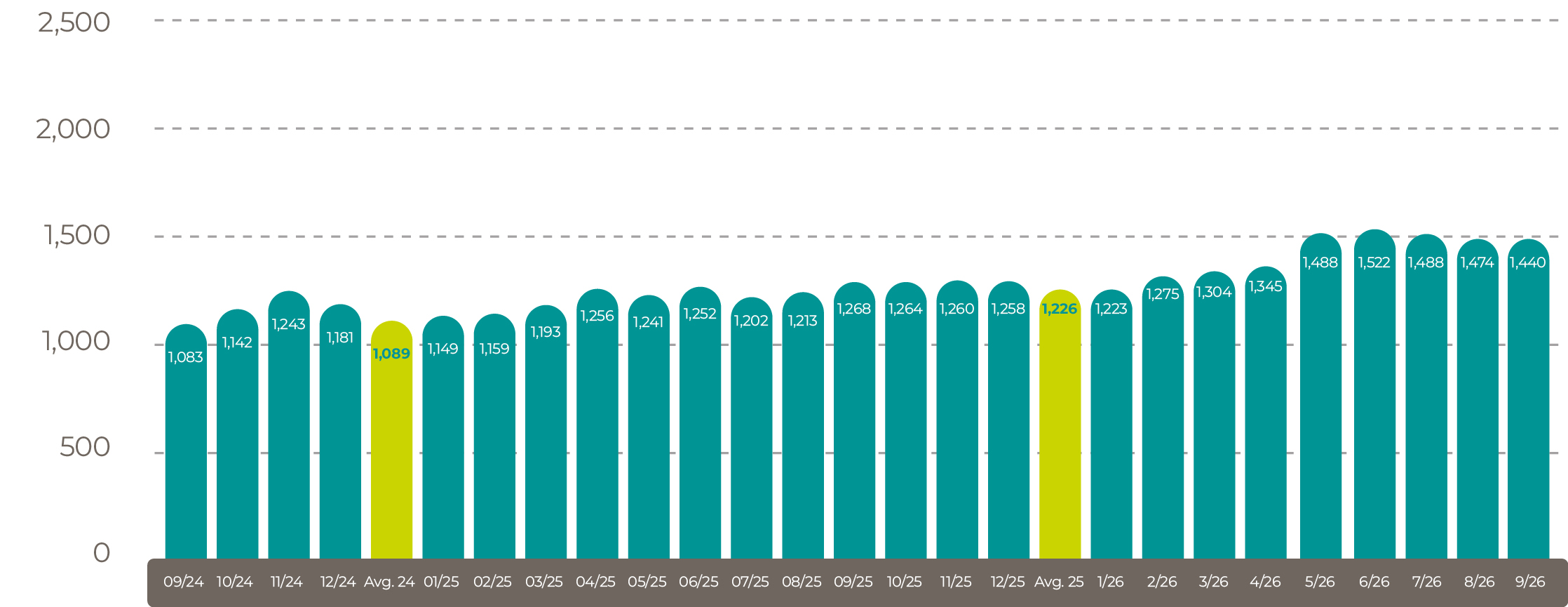
The average global crude oil price rose 21.2% in the month to US$102.30 a barrel, its highest monthly average since April this year. Soybean oil prices fell 1.5% in the month to US$1,615/tonne, but that was up 39.3% on the year before. The average rapeseed oil price was down 2.3% in the month and 13.6% higher over the year to US1,440/tonne, while the sunflowerseed price dropped 6.3% in the month to US$1,390/tonne, an increase of 5.9% over the year.
Global September oilseed production estimates have been increased on higher rapeseed and sunflowerseed production, according to the US Department of Agriculture. Rapeseed output is expected to be up in Australia, Russia, Kazakhstan, and Uruguay, with a 1.9 million tonne increase. The sunflowerseed estimate rose one million tonnes with greater production in Kazakhstan, Russia, and the European Union.
The US soybean crop is expected to be one of the largest ever at 122.5 million tonnes, up 0.4% on the August estimate. However, greater exports are expected to reduce ending stocks by 3.1% to 8.440 million tonnes. The average soybean US price is expected to be US$441/tonne, up US$22/tonne on the month before. Soymeal price expectations rose US$33 to US$375/tonne, with soybean oil prices unchanged at US$1,543/tonne.
The USDA’s September estimates for world oilseed production were 723.46 million tonnes, 3.2% more than the year before. Stocks are expected to be up 0.5% to 145.86 million tonnes. Vegetable oil production is estimated to be 2.3% up on the year before at 246.36 million tonnes, with trade up 2.9% and stocks 1% higher at 30.8 million tonnes.
Soybean oil
 Rapeseed oil
Sunflower oil
Shipping update
China to US shipping costs keep global average high
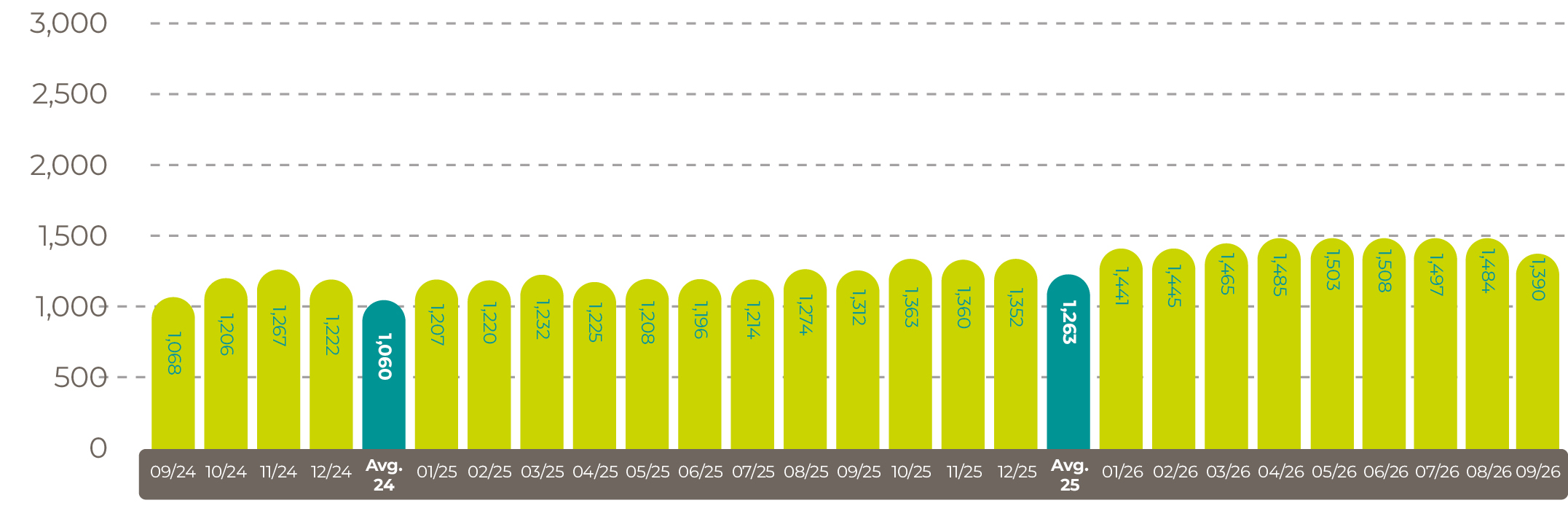
Average global shipping costs have remained stubbornly high for the last four months, but that masks falling costs in some regions of the world. In the first week of October, the average Drewry World Container Index price was US$4,434 per 40-foot container. That was very similar to the week before, but twice the rate in April this year when costs soared because of disruption to global shipping, especially in the Middle East.
The rapid rise has largely been because of higher costs on the China to US routes. The latest rate on the Shanghai to New York route is US$10,428 per 40-foot container, 220% more than the year before. In contrast, the cost on European routes has fallen, with Shanghai to Rotterdam at US$3,399, down from a peak of US$4,933 in July, but still double what it was a year ago.
From the October 1, 2026 Drewry World Container Index report:
- The Drewry World Container Index (WCI), the benchmark widely referenced by procurement teams, fell 1% to US$4,434 per 40-foot container, driven by a decrease in rates on the Asia–Europe trade route.
- On the Transpacific trade route, rates from Shanghai to New York rose 1% to US$10,428 per 40-foot container, while those from Shanghai to Los Angeles remained stable at US$7,835 per 40-foot container. Carriers continue to manage capacity via blank sailings. According to Drewry’s Container Capacity Insight, 10 blank sailings have been announced for next week, down from 13 this week, indicating increased capacity. While demand remains resilient, factories across China will remain shut during Golden Week, reducing cargo volumes; therefore, Drewry expects rates to decrease next week.
- On the Asia–Europe trade route, rates from Shanghai to Genoa fell 3% to US$3,702 per 40-foot container, while from Shanghai to Rotterdam decreased 2% to US$3,399 per 40-foot container. Rates on the Asia–Europe trade have now declined for 12 consecutive weeks, reflecting weak demand. According to Drewry’s Container Capacity Insight, five blank sailings have been announced for next week, down from six this week, indicating slightly more scheduled capacity. Additionally, increasing vessel transits through the Suez Canal are adding effective capacity to the trade, putting further downward pressure on rates. Carriers are attempting to reverse the downward trend by introducing higher FAK rates in the second half of October, following China’s Golden Week holiday. However, the successful implementation of these increases remains uncertain. Drewry expects rates to continue declining next week amid the Golden Week holiday.
- The East–West container freight market remains under pressure as China’s Golden Week has started, with factory closures affecting cargo flows. At the same time, increasing Suez Canal transits are adding capacity to the Asia–Europe trade, while uncertainty around Houthi activity remains. Suez transits in Week 39 were 68% higher than in the same week last year. Disruptions in the Strait of Hormuz also continue to affect shipping operations. The extended US–China trade truce could support a rebound in US-bound demand after the holiday period. Overall, the market is expected to remain volatile in the near term, with demand, capacity changes and geopolitical developments likely to influence freight rates.
Source: Drewry Supply Chain Advisors
Disclaimer: The information in this document has been obtained from or based upon sources believed to be reliable and accurate at the time of writing. The document should be for information purposes only and is not guaranteed to be accurate or complete.