
A guide to bypass fats in dairy nutrition
A guide to bypass fats in dairy nutrition
How rumen-protected fats improve milk production, fertility and feed efficiency
As margins tighten and production targets continue to rise, dairy farmers are under increasing pressure to maximise herd performance. Foundational to this is meeting energy requirements without disrupting rumen function, says Dr Richard Kirkland, Global Technical Manager for Volac Wilmar Feed Ingredients.
One nutritional tool that has helped producers achieve this balance is rumen-bypass fat – more commonly known as rumen-protected fat. Designed to deliver concentrated energy without interfering with rumen fermentation, rumen-protected fats have become an important component of modern dairy nutrition.
“Fat is the highest-energy nutrient available to dairy cows, but the way it is supplied is critical,” says Dr Kirkland. “Rumen-protected fats allow producers to increase dietary energy density safely, without the negative effects that conventional fat sources (e.g. vegetable oils, or high-oil ingredients such as brewer’s grains) can have on rumen function.”
What are rumen-protected (bypass) fats and how do they work?
Bypass fats are fat supplements specifically manufactured to resist breakdown in the rumen, avoid negative interference with rumen fibre digestion, and pass into the small intestine for digestion and absorption. This allows cows to benefit from the energy and functional effects of fatty acids without disrupting the rumen microbes responsible for fibre digestion.
In contrast, unprotected fats such as vegetable oils can create an “oil slick” effect in the rumen, coating fibre particles and reducing digestibility, feed efficiency and milk fat production.
“Protection serves two purposes,” explains Dr Kirkland. “It protects the rumen from the fat to avoid negative effects on fibre digestion, and it protects the fatty acids from rumen biohydrogenation, ensuring they reach the small intestine where they can be absorbed and utilised by the cow in their active form.”
How are bypass fats manufactured?
One of the most widely used methods of producing rumen-protected fats is through calcium salts of fatty acids. In these products, fatty acids are reacted with calcium to create a rumen-insoluble compound that remains stable in the rumen before breaking down in the acidic conditions of the abomasum.
Research by Volac Wilmar Feed Ingredients at the National University of Singapore, has also shown that particle size influences rumen protection. Results demonstrate that smaller granules break down more readily as they pass through the rumen than larger granules, reducing the effectiveness of the rumen-protection.
“Selecting the Megalac calcium salt brand, which has been manufactured to contain a higher proportion of larger granules, is an effective way to optimise cow performance by minimising negative rumen effects and improving fatty acid supply,” says Dr Kirkland.
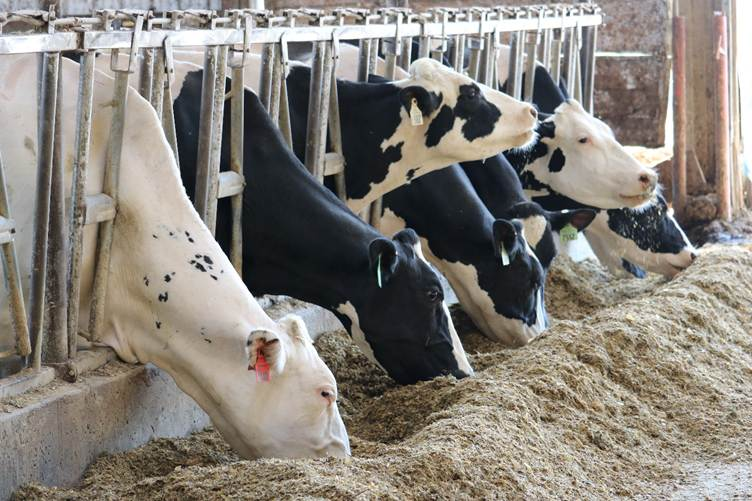 Bypass fats, more commonly known as rumen-protected fats, are designed to deliver energy efficiently while protecting rumen function.
Why do farmers use bypass fats?
While bypass fats have traditionally been viewed as highly-effective ingredients to increase energy supply in the diet, for example Megalac has a proven ME of 33.3 MJ/kg DM, ongoing research has shown their benefits extend far beyond simply adding calories to the ration.
“Fat is the most concentrated source of energy available to dairy cows, containing more than 2.5-times the energy of cereals,” explains Dr Kirkland. “A further advantage of rumen-protected fats is that they allow us to increase energy density without adding to the acid load in the rumen, helping cows meet their energy requirements safely and efficiently.”
Research from Cornell University, USA, highlights the efficiency benefits of this approach. Supplementation with Megalac increased milk yield by 3.2kg per day while improving feed efficiency, meaning cows produced more milk and milk solids from each kilo of feed consumed, while also reducing methane production.
The response depends largely on the fatty acids supplied. Oleic acid (C18:1), found in calcium salt supplements, improves total fat digestibility, supports body condition and promotes egg and embryo development, making it particularly beneficial for fertility during early lactation. In contrast, palmitic acid (C16:0) directs more nutrients towards milk fat production and milk solids.
“Understanding fatty acids is just as important as understanding fat itself,” says Dr Kirkland. “Different fatty acids influence how nutrients are partitioned within the cow, allowing producers to evaluate products with different fatty acid profiles to target specific performance goals.”

Dr Richard Kirkland, Global Technical Manager for Volac Wilmar Feed Ingredients.